
IAHR-APD Awards
The Division presents three awards at each regional congress: for distinguished individual contribution, for hydraulic heritage in the region, and for the best papers of the congress.
2026 recipients

Hokkaido University, Japan
Recognised for his contributions to computational river morphodynamics over a career spanning several decades. His work on the numerical modelling of river channel processes — sediment transport, bank erosion, braided-river dynamics and the interaction between vegetation and flow — has shaped the modern practice of river engineering. He was a central figure in the development of the iRIC (International River Interface Cooperative) software platform and its river-simulation solvers, adopted widely by researchers and practitioners internationally as open-source tools for river analysis. Through his teaching, his supervision of researchers now active across the region, and his long service to IAHR and its Asia and Pacific Division, Prof. Shimizu has advanced both the science and the international community of hydro-environment engineering.
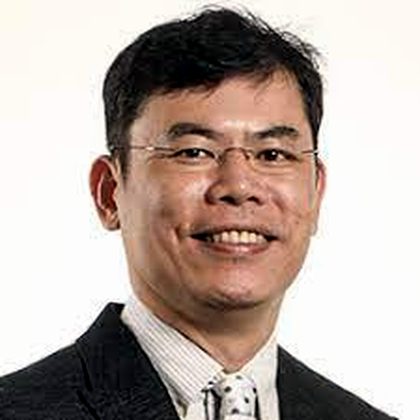
National University of Singapore, Singapore
Recognised for his contributions to environmental and coastal hydraulics and for his sustained service to the international water community. He holds Ph.D. and M.Sc. degrees in Civil and Environmental Engineering from the University of California, Berkeley, and a B.Eng. from the University of Hong Kong. After more than seven years of engineering practice in the United States he joined Nanyang Technological University in 1995, and has been Professor at the National University of Singapore since 2024. He chaired the joint IAHR/IWA Committee on Marine Outfall Systems (2014–2016) and represented Singapore at the ASEAN Hydroinformatics Data Centre (2022–2023). As Editor-in-Chief of the Journal of Hydro-environment Research he has been instrumental in strengthening the Division's flagship journal.
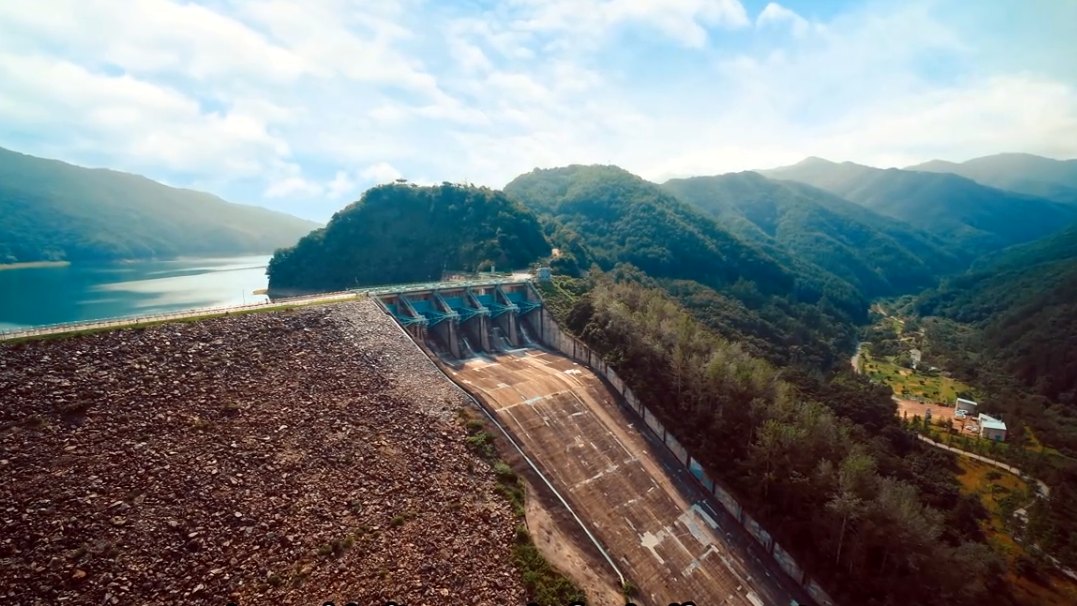
Chuncheon, Republic of Korea — received on behalf of K-water by Mr Yu In-Seon
The Soyanggang Dam impounds the Soyang River above Chuncheon in Gangwon Province, at the head of the Han River system. Built between 1967 and 1973, it was on completion the largest rockfill dam in Asia: 123 metres high, with a crest some 530 metres long, holding a reservoir of about 2.9 billion cubic metres.
It was conceived as a multipurpose structure and has served as one ever since. It regulates floods on the Han River above the capital, supplies water to the Seoul metropolitan region, sustains river flows through the dry season, and generates hydroelectric power. More than half a century of continuous operation has made it the backbone of water management in the basin, and the reservoir it created — Soyang Lake — has reshaped the landscape and economy of the region around it.
The dam is recognised as much for what it represents as for what it does: a work of water engineering carried out at a scale the country had not previously attempted, and a marker of the development of Korea's water infrastructure. It is operated by K-water.
- Simulation of shallow and dispersed overland flow in urban catchment by a particle methodAkihiko Nakayama and Xin Yan LyeUniversiti Tunku Abdul Rahman, Malaysia
- Scenario-based simulation of delayed sluice gate operation for CSO control in a restored urban stream: Cheonggyecheon case studySujin Kim and Won JeongThe Seoul Institute, Republic of Korea
- High-resolution urban flood simulation for large domains enabled by multi-GPU computingBomi Kim, Hyungon Ryu, Seungsoo Lee, Jun-Hak Lee and Seong Jin NohKumoh National Institute of Technology, Republic of Korea
- Effect of particle shielding on cavitation erosion mitigation in hyper-concentrated sediment flowsYushuang Sun, Kunpeng Su and Dingkang XiaYangzhou University, China
Distinguished IAHR-APD Membership Award
Presented to an individual whose sustained contribution to hydro-environment engineering and to the Division itself has been of exceptional value to the region.
- 2026Prof. Yasuyuki Shimizu · Hokkaido University, JapanProf. Adrian Law Wing Keung · National University of Singapore
- 2024Gregory Shahane De Costa · Open Polytechnic of New Zealand, New Zealand
- 2022Hyoseop Woo · Republic of Korea
- 2020Bruce Melville · New ZealandKyung Soo Jun · Republic of Korea
- 2018Jing Peng · China
- 2016Hitoshi Tanaka · Japan
- 2014Il Won Seo · Republic of Korea
- 2012Vallam Sundar · IndiaLianxiang Wang · China
- 2010Joseph Hun-Wei Lee · Hong Kong, ChinaAshim Das Gupta · Thailand
IAHR-APD Water Conservancy and Environmental Heritage Award
Presented to a hydraulic structure, system or site in the region of outstanding historical, technical or cultural significance.
- 2026Soyanggang Dam · Chuncheon, Republic of Korea
- 2024Hankou Hydrological Station · Wuhan, China
- 2022Grand Anicut / Kallanai · India
- 2020Flood control and water utilisation facilities, Ishikari River basin · JapanTatsumi Aqueduct · JapanSayamaike Reservoir · Japan
- 2016Parakrama Samudraya · Sri Lanka
IAHR-APD Best Paper Award
Selected from the papers presented at each regional congress. Award papers are regularly invited for the JHER congress special issue.
- 2026Simulation of shallow and dispersed overland flow in urban catchment by a particle method · Akihiko Nakayama and Xin Yan LyeScenario-based simulation of delayed sluice gate operation for CSO control in a restored urban stream: Cheonggyecheon case study · Sujin Kim and Won JeongHigh-resolution urban flood simulation for large domains enabled by multi-GPU computing · Bomi Kim, Hyungon Ryu, Seungsoo Lee, Jun-Hak Lee and Seong Jin NohEffect of particle shielding on cavitation erosion mitigation in hyper-concentrated sediment flows · Yushuang Sun, Kunpeng Su and Dingkang Xia
- 2024Diagnosing non-stationarity of hydrological model structure using Bayesian model averaging · Liting Zhou, Xiaojing Zhang, Hairong Zhang, Huaming Yao, Pan LiuAchieving SDG6 for sustainable water supply and wastewater management in Southeastern Europe · Elpida Kolokytha, Yannis Mylopoulos, Dionysis Latinopoulos, Jovan Despotović, Aleksandar Djukić, Branislav BabićExperimental investigation on the filling process of a long-distance pressurized water conveyance tunnel · Songlin Han, Xiaoxia Hou, Zhixin Wang, Zhibing Jiang, Duan ChenExploring the effects of modifying stratification reality and biogeochemical model parameters on hypoxia using DN-4DVar · Takanori Nagano, Masayasu Irie
- 2022Numerical modelling of ship waves and induced sediment resuspension in the Hooghly River, India · Mainak ChakrabortyEliminating fixation of alternate bars by using impermeable groynes · Ryotaro EndoCombined storm surge and river flow simulation for the Hooghly Estuary, east coast of India · B. SridharanNumerical investigations into wave attenuation characteristics of vegetation belt in terms of vortex shedding · N. Hari RamApplication of IITM-RANS3D to wave-breaking and wave–structure interaction problems · Shaswat Saincher
- 2020Variability in stage–discharge relationships in river reach with bed evolutions · Robin K. Biswas, Shinji Egashira, Daisuke HaradaEffects of submerged weir with an opening on bed deformation and flow structure under live-bed conditions · Hirotaka Une, Terunori OhmotoUncertainties of machine learning in predicting the hydrological responses of LID practices · Yang Yang, Ting Fong May ChuiReynolds number effects of internal solitary waves propagating on a uniform slope · Hai Zhu, Songping Mao, Decai Sun, Lingling Wang, Zhenzhen Yu, Cheng Lin
- 2018Effect of climate change variables on the coastal wind prediction · SyamsidikEffect of the combination of forest and the front-side moat along a river where a tsunami runs up · Yoshiya Igarashi, Norio TanakaDominating factors influencing rapid channel migration during floods — a case study on Otofuke River · Tomoko Kyuka, Yasuyuki Shimizu
- 2012Analysis of dispersion characteristic using tracer test in natural stream · Il Won Seo
- 2010The structure of flows in suspended aquaculture canopies · David Plew